


SOLRISEN
PTW307
| Quantity: | |
|---|---|


The Gasoline Trash Pump is designed for demanding water transfer conditions where high flow, high head and strong solids handling are important. Powered by an air-cooled, 4-stroke gasoline engine, this engine-driven pump provides a flexible pumping solution for outdoor and other locations where a fixed electrical power supply may not be convenient.
Unlike pumps designed primarily for clean water, a trash pump is built to handle water containing solid particles and debris. The large debris passage helps reduce the risk of blockage during operation, while the durable cast iron construction provides a strong pump structure for demanding working conditions.
With its combination of gasoline engine power, high-flow performance, high-head capability and solids handling, this gasoline trash pump is suitable for a wide range of demanding water transfer and drainage application.
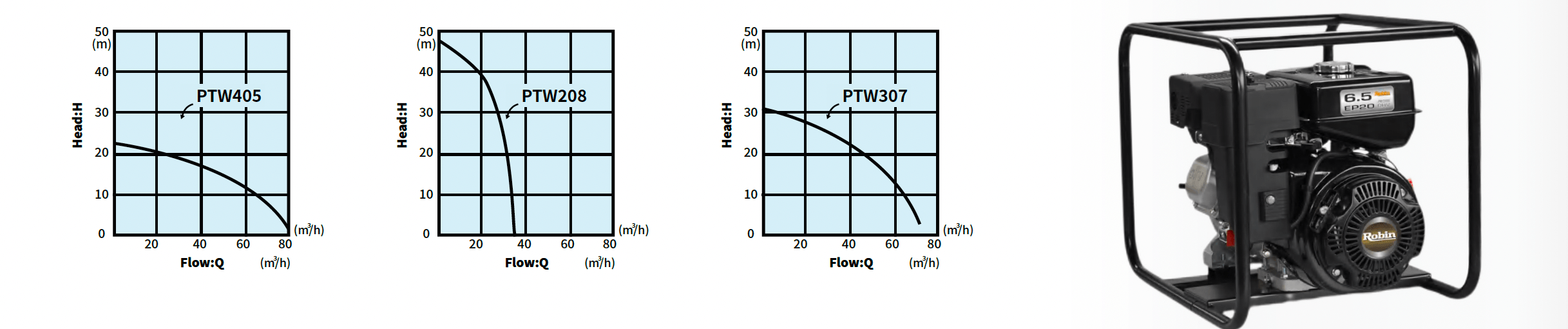
A trash pump is designed for moving water that may contain debris, solid particles and other materials that can create problems for conventional clean-water pumps.
This gasoline trash pump uses an engine-driven pumping system to transfer water without depending on a fixed electrical connection. This makes it particularly practical for outdoor applications, construction environments and other working locations where flexible equipment is required.
The pump features a durable cast iron construction and a large debris passage. These features support reliable pumping when the water being transferred is not completely clean.
The engine system uses an air-cooled, 4-stroke gasoline engine. The catalog specifies automotive unleaded gasoline as the fuel and lists recoil starting, with electric starting available for selected configurations.
The result is a practical engine-driven water transfer solution designed for demanding pumping conditions.

High flow is one of the main advantages of this trash pump design.
For water transfer applications, moving a large volume of water efficiently can be an important requirement. The pump is designed to provide high-flow performance for demanding water transfer tasks.
This makes it suitable for applications where efficient water movement is more important than the compact design commonly associated with smaller clean-water pumps.

The pump is also designed for high head performance.
Head is an important consideration when water needs to be moved through a discharge system or transferred under more demanding pumping conditions. A pump with high-head capability provides greater flexibility when selecting equipment for a particular water transfer application.
The combination of high flow and high head makes this trash pump suitable for demanding pumping requirements.

One of the key differences between a trash pump and a standard clean-water pump is its ability to handle water containing solid particles.
This model is designed with strong solids handling capability. It can therefore be considered when the water being pumped may contain debris or solid materials that could create blockage problems for pumps designed only for cleaner water.
For demanding outdoor pumping applications, solids handling can be an important factor when selecting the right pump.

The pump features a large debris passage to support the handling of water containing debris. A large debris passage is particularly useful when the water source is not completely clean. It helps provide a more practical pumping solution for applications where solid particles may be present in the water.
This feature also supports the overall solids-handling design of the trash pump.

The pump uses durable cast iron construction. Cast iron provides a strong and robust structure for demanding pumping environments. Combined with the engine-driven design, the construction is intended to support dependable operation during regular water transfer work.
For professional users, pump construction is an important consideration because the equipment may be used in outdoor or challenging working conditions.

The pump is powered by an air-cooled, 4-stroke gasoline engine.
A gasoline engine provides an independent power source for the pump. Unlike electrically powered pumps, the equipment does not require a fixed electrical power connection during normal operation.
This provides additional flexibility for outdoor applications and work locations where access to electricity may be limited or inconvenient.
| Model | PTW208 | PTW307 | PTW405 |
|---|---|---|---|
| PUMP – Type | Trash pump | Trash pump | Trash pump |
| Suction x Delivery Diameters | 50.8 × 50.8 mm (2 × 2 in.) | 76.2 × 76.2 mm (3 × 3 in.) | 101.6 × 101.6 mm (4 × 4 in.) |
| Total Head | 46 m | 30 m | 31 m |
| Maximum Delivery Volume | 36 m³/h | 72 m³/h | 81 m³/h |
| Suction Head | 8 m | 8 m | 8 m |
| ENGINE – Model | EP20D | EK20D | EK40D |
| Type | Robin Air-cooled, 4-stroke, Gasoline engine | Robin Air-cooled, 4-stroke, Gasoline engine | Robin Air-cooled, 4-stroke, Gasoline engine |
| Fuel | Automotive Unleaded Gasoline | Automotive Unleaded Gasoline | Automotive Unleaded Gasoline |
| Fuel Tank Capacity | 3.7 L | 3.7 L | 6.8 L |
| Starting System | Recoil starter | Recoil starter | Recoil start / Electric start |
| Dimensions (L × W × H) | 560 × 430 × 460 mm | 560 × 430 × 460 mm | 650 × 480 × 555 mm |
| Net Weight | 31.1 kg | 35.7 kg | 52.1 kg |
| Standard Accessories | Handles (2 pcs), Hose couplings (2 pcs), strainer with flange (1 pc) | Handles (2 pcs), Hose couplings (2 pcs), strainer with flange (1 pc) | Handles (2 pcs), Hose couplings (2 pcs), strainer with flange (1 pc) |
The exact suction and delivery diameters, total head, maximum delivery volume, suction head, dimensions and net weight vary by model. Please refer to the corresponding model specification for detailed technical data.
Choosing the right water pump depends on the condition of the water, the required flow, the pumping head and the working environment. A gasoline trash pump can be a suitable choice when several factors are important at the same time.
If the water contains solid particles or debris, a trash pump can provide advantages over equipment designed primarily for clean water.
The large debris passage and strong solids handling capability are designed specifically for this type of pumping condition.
For applications that involve moving large quantities of water, high flow performance is an important consideration.
This pump is designed for high-flow water transfer, making it suitable for demanding applications where efficient water movement is required.
High-head capability can be important when water must be transferred through a more demanding discharge system.
This pump combines high flow with high head performance to provide a versatile solution for different water transfer requirements.
A gasoline-powered pump does not depend on a fixed electrical connection.
This makes it practical for outdoor jobsites, temporary pumping operations and other locations where access to electrical power may be limited.
Gasoline trash pumps are designed for demanding water transfer conditions and can be used in a variety of working environments. The exact application should always be selected according to the pump model, operating conditions and technical requirements.

Drainage is another common application for trash pumps.
During demanding drainage work, the water may not always be completely clean. It can contain dirt, debris or solid particles.
A pump designed with strong solids handling and a large debris passage can therefore provide a more appropriate solution for these conditions.

Outdoor work often requires portable and flexible pumping equipment.
Because this pump is gasoline-powered, it can operate independently from a fixed electrical connection. This provides greater flexibility when working in outdoor locations.
A clean-water pump and a trash pump are designed for different water conditions.
A clean-water pump is generally intended for water with little or no solid debris. A trash pump is designed to provide better handling of water containing solid particles and debris.
The large debris passage is one of the important design features of a trash pump. It helps reduce the risk of blockage when the water contains larger particles. The following comparison provides a simple overview:
| Feature | Gasoline Trash Pump | Clean Water Pump |
|---|---|---|
| Water Condition | Water containing debris or solid particles | Relatively clean water |
| Solids Handling | Strong solids handling | Generally intended for limited solids |
| Debris Passage | Large debris passage | Usually smaller |
| Power Source | Gasoline engine | Depends on pump type |
| Typical Use | Demanding water transfer and drainage | Clean-water transfer |
For water containing debris, selecting a pump designed for solids handling can help provide a more suitable pumping solution.
An engine-driven water pump provides several practical benefits for outdoor pumping work.
Gasoline Engine | Flexible Operation |
| Operates without a fixed electrical power supply, making it suitable for outdoor and remote pumping applications. | Easy to position in different work areas for construction, drainage and other outdoor pumping tasks. |
Robin 4-Stroke Engine | Cast Iron Construction |
| Provides reliable mechanical power for water transfer applications. | Provides a robust pump structure for demanding water transfer work. |
Trash Pump Design | Large Debris Passage |
| Designed to handle water containing solid particles and debris. | Supports water transfer where dirt and debris are present. |
The Gasoline Trash Pump provides a combination of performance and flexibility for demanding pumping work.
A gasoline trash pump is an engine-driven pump designed to transfer water containing solid particles and debris. Compared with a clean-water pump, it is designed with stronger solids handling capability and a larger debris passage.
A trash pump is used for demanding water transfer and drainage applications where the water may contain debris or solid particles. It can be considered for construction, outdoor water transfer and other applications requiring flexible engine-driven pumping.
No. This product is identified in the product catalog as a trash pump, not a submersible sewage pump. Its primary product characteristics are high flow, high head, strong solids handling and a large debris passage.
The pump uses an air-cooled, 4-stroke gasoline engine. The catalog identifies the engine as a Robin engine and specifies automotive unleaded gasoline as the fuel.
No fixed electrical power connection is required for the gasoline engine itself. The engine provides an independent power source, making the pump suitable for locations where electrical power is not convenient.
Yes. Strong solids handling and a large debris passage are among the main features of the trash pump. These features are designed to support water transfer when solid particles or debris are present.
The pump uses durable cast iron construction. This provides a robust structure for demanding pumping conditions.
The catalog specifies a recoil starter and also lists electric start for selected configurations. The exact starting system depends on the model.
Standard accessories include handles, hose couplings and a strainer with flange.
Start by checking the required flow, pumping head, suction conditions, water condition and available operating environment. Then compare the technical specifications of the available PTW Series models.
A trash pump can transfer water, but its design is particularly useful when debris or solid particles may be present. For applications involving only clean water, a pump specifically designed for clean water may also be considered.
The catalog specifies automotive unleaded gasoline. Always use the correct fuel and follow the instructions for the specific engine configuration.
Choosing the right trash pump starts with understanding your water transfer requirements.
If you need high flow, high head and strong solids handling for demanding pumping conditions, this gasoline trash pump provides a practical engine-driven solution.
With its air-cooled 4-stroke gasoline engine, durable cast iron construction, large debris passage and flexible starting options, the pump is designed for users who need reliable water transfer equipment for demanding environments.
Contact us to discuss your application, required flow and head, water conditions and preferred pump configuration. Our team can help you identify the suitable model from the PTW Series according to your specific requirements.


